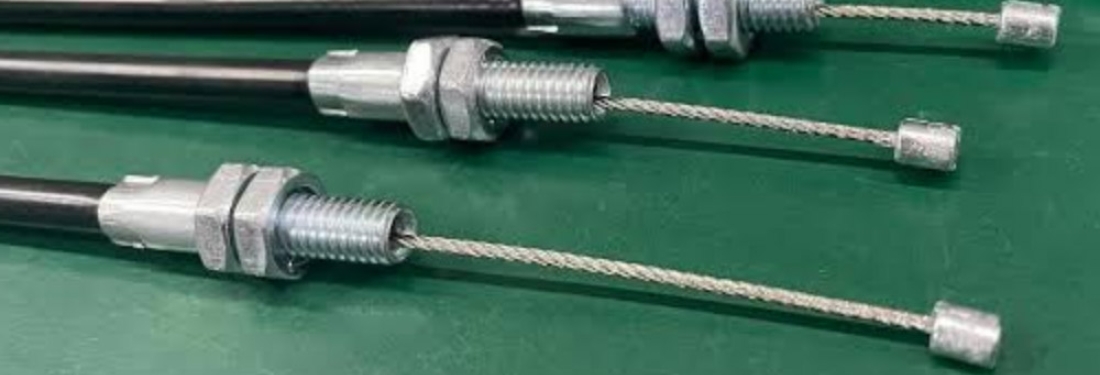
Control Cable Wire Rope is a mechanical force transmission component used in control systems, industrial equipment and mobile machinery. It is designed to transfer pulling force and mechanical movement to remotely operated components. Common applications include automotive throttle and brake cables, valve control systems, mechanical levers, construction machinery, marine equipment and industrial machines. Control cable wire ropes are generally manufactured from multiple small-diameter steel wires to provide flexibility and withstand repeated tensile loads and bending cycles. Common constructions include 7×7 and 7×19, selected according to the required flexibility, minimum bending radius and working tensile force.
According to nanotejarat, Materials used in Control Cable Wire Rope play an important role in durability, operational accuracy and corrosion resistance. Galvanized carbon steel is widely used because it offers suitable tensile strength and zinc coating protection against moisture and surface corrosion. For demanding applications, humid environments and corrosive conditions, stainless steel grades 304 and 316 are also available. Typical wire rope diameters range from approximately 1 to 6 mm, depending on the required tensile load, cable length, operating frequency and friction conditions. Important technical specifications include wire construction, individual wire diameter, minimum breaking load (MBL), core type and stranding quality. These parameters determine the reliability, service life and performance of control cable wire ropes in industrial and mechanical applications.
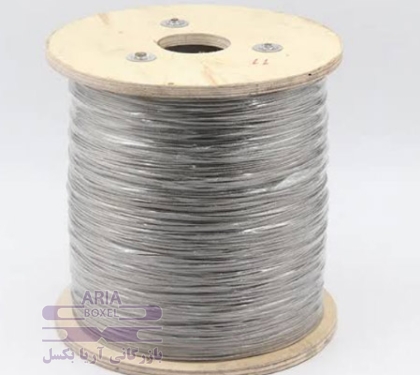
 1X19 control cable wire rope carbon steel
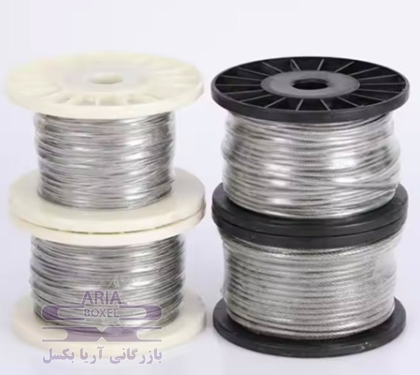 7X7 control cable wire rope carbon steel


